
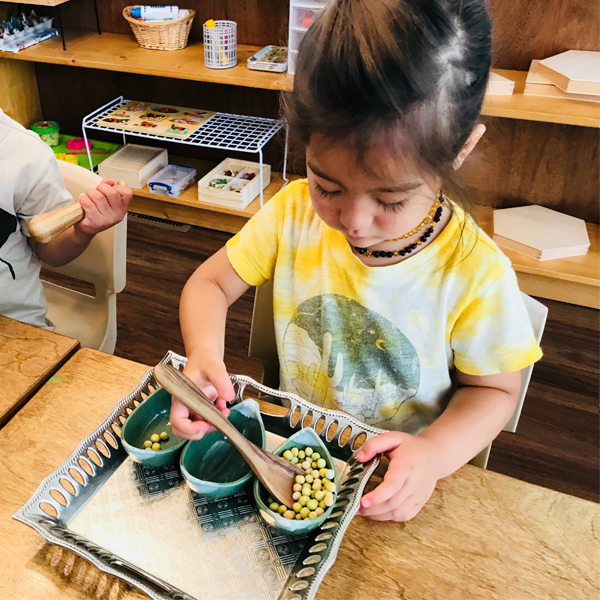
Practical Life
The term Practical Life is used to describe those exercises which involve everyday activities with real child sized materials. These exercises form the basis of the child’s physical, intellectual, emotional, and social development. Because they are based on the observation of daily activities, the range of practical life activities is vast. In this section, we will explore various examples that are commonly found in Montessori classrooms across the US. The goal of Practical Life activities is not an academic one, rather, it is an exercise based in familiarity which the child may focus their attention on to attain discipline and strengthen their sense of concentration. Parents and teachers should remember that practical life activities should reflect what the child is witnessing in their daily lives.
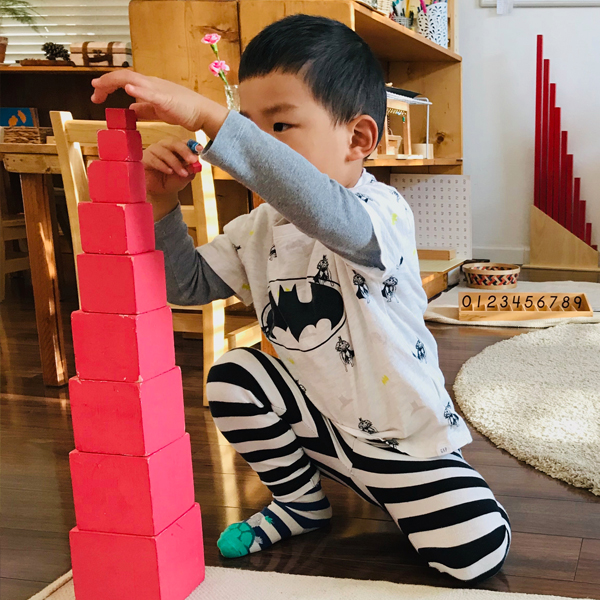
Sensorial
Sensory materials have been developed to facilitate the formation of ordered thought. For developing minds, sensory input is a mechanism to understand the world around them. Children will often taste, touch, and listen to sounds they create by interacting with their environment. The senses can be categorized by visual, tactile, auditory, olfactory, gustatory, thermic, baric, stereognostic, and chromatic. By deepening the cognitive connections of these senses, children develop the capacity for deeper concentration and abstract thought.
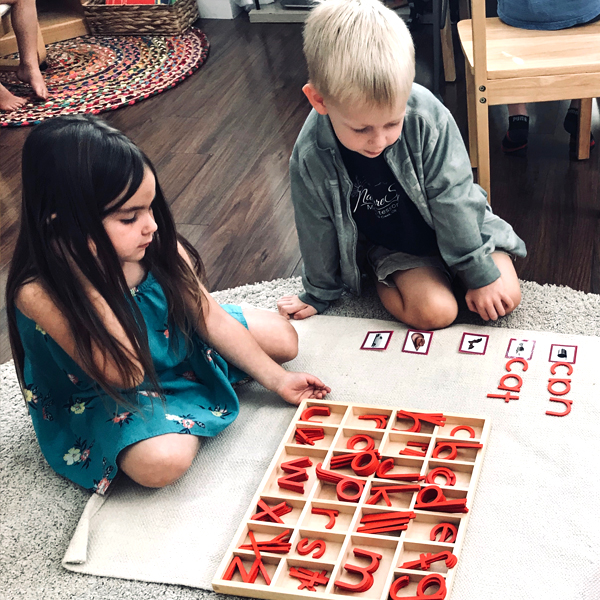
Language
“Language is the instrument of collective thought”
Language work flows from the development of concentration, ordered thought, and fine motor skills that are attained through interaction with Sensory and Practical Life activities. A child’s natural tendency towards increasingly more complex work will lead them towards picture recognition, word association, commands, phrases, and ultimately sentences. Children come to recognize phonetic symbols as representative ideas and sounds, paving the way to more complex abstractions such as reading comprehension and multiple languages.
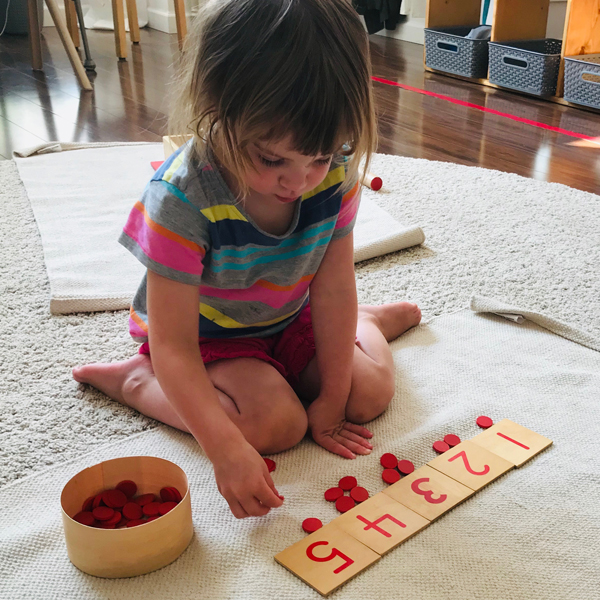
Mathematics
Maria Montessori believed that children are naturally attracted to numbers and born with a “mathematical mind”, which is built up with exactity based on the order and perceptual awareness found in the development of the senses. These sensorial impressions allow the child to create mental order which leads to reasoning and differentiation. The child that has mastered the basic concepts involved with practical life and sensorial materials progresses naturally to the beginning Math activities.
Culture
“Averting war is the work of politicians; establishing peace is the work of education.”
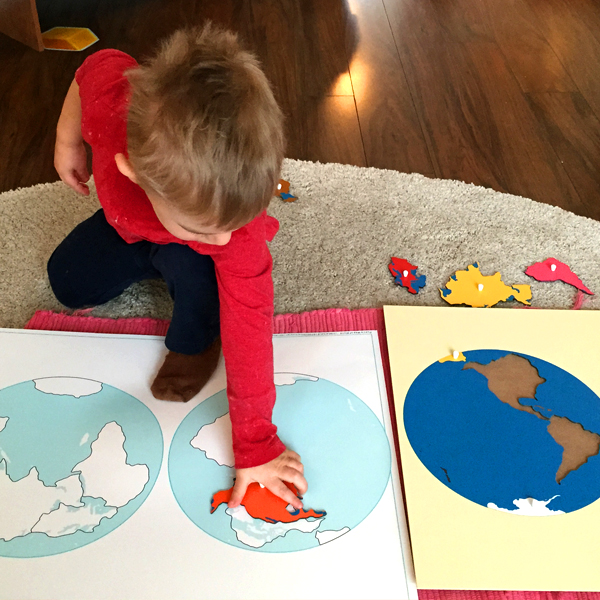
The Cultural area of the Montessori classroom covers subjects like Geography, Science, Botany, Zoology, History, Art, and Music. Maria Montessori felt that having an understanding of these subjects developed a more “cultured” individual. Materials are refreshed on a monthly basis as topics and areas of study change throughout the year. We will explore people, food, holidays, music, and biology from around the world. These activities are layered in with the four seasons, five senses, layers of the earth, etc. We strongly encourage parents to share stories of their own cultures and backgrounds.